
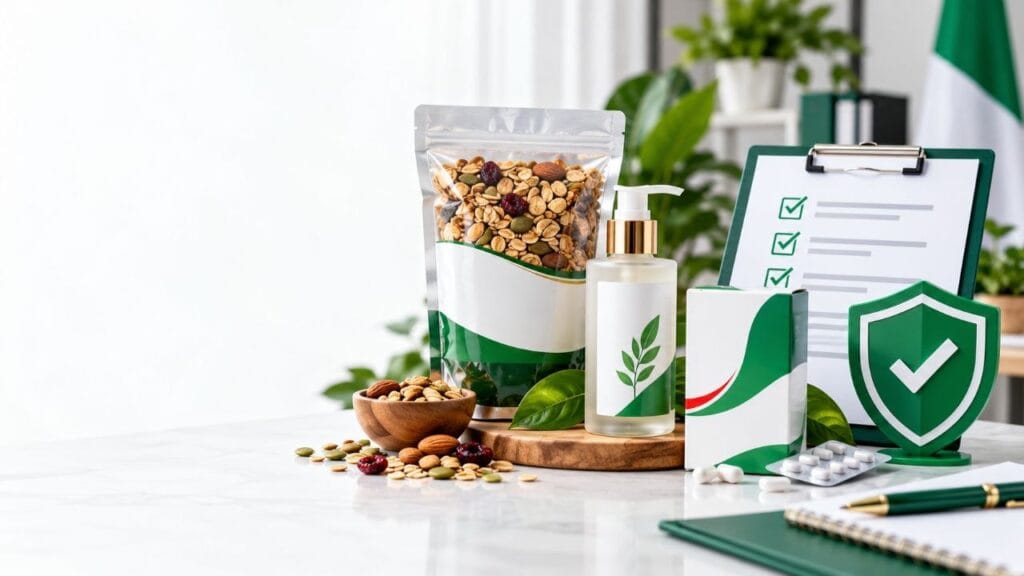
NAFDAC registration in Nigeria helps product-based businesses build trust, meet regulatory expectations and prepare for wider distribution.
If you produce, package, import, distribute, or sell regulated products in Nigeria, NAFDAC registration is one of the most important compliance steps for your business. It is not just a document for display. It helps customers, distributors, retailers, and regulators know that your product has gone through the proper approval channel.
Many small business owners start with a good product idea, good packaging, and strong marketing, but they delay compliance until a buyer, supermarket, online marketplace, export partner, or government officer asks for their NAFDAC number. That delay can affect sales, trust, and expansion. If your business deals with food, drinks, cosmetics, drugs, medical products, chemicals, detergents, packaged water, or similar regulated items, it is better to understand the process early.
This guide explains NAFDAC registration in Nigeria in simple English. It covers what NAFDAC does, who needs registration, what to prepare, how the process works, common mistakes to avoid, and how Stepupconnect can help you handle the process more smoothly.
What is NAFDAC?
NAFDAC means the National Agency for Food and Drug Administration and Control. According to the official NAFDAC services page, the agency regulates and controls the manufacture, importation, exportation, distribution, advertisement, sale, and use of regulated products in Nigeria.
In simple terms, NAFDAC helps protect the public from unsafe, fake, poorly labelled, or wrongly marketed products. The agency checks products, facilities, labels, samples, and documents before granting approval for regulated products to enter the Nigerian market legally.
Products that may need NAFDAC registration
Not every business needs NAFDAC registration, but many product-based businesses do. NAFDAC regulates several categories of products, including:
- Food and beverages
- Packaged water
- Drugs and pharmaceutical products
- Cosmetics and skincare products
- Medical devices
- Chemicals and detergents
- Veterinary products
- Vaccines and biological products
- Imported regulated products
The official NAFDAC website also lists the product areas it regulates, including food, drugs, chemicals, and cosmetics and medical devices. If your product falls into any regulated category, you should confirm the right registration path before selling widely.
Why NAFDAC registration matters for your business
For many business owners, NAFDAC registration feels like a government requirement that can be postponed. In reality, it can affect the way your business grows. A product with proper registration is easier to present to serious buyers, distributors, retailers, export partners, and customers who care about safety.
Here are key reasons NAFDAC registration matters:
1. It builds customer trust
Customers are becoming more careful about what they eat, drink, apply on their skin, or use for health and household purposes. A NAFDAC number gives people more confidence that the product has passed through a recognised regulatory process.
2. It helps you sell through better channels
Many supermarkets, pharmacies, distributors, hotels, online platforms, and corporate buyers will not accept regulated products without proper documentation. If you want your product to move beyond informal sales, compliance is important.
3. It reduces regulatory risk
Selling regulated products without the right approval can expose a business to seizure, fines, product withdrawal, or other enforcement actions. Registration helps you operate with more confidence and structure.
4. It supports business expansion
If you plan to scale, attract partners, export, or build a long-term brand, your compliance documents become part of your business foundation. NAFDAC registration can work together with CAC registration, trademark protection, and other compliance steps to make your business more credible.
Who should consider NAFDAC registration?
You should consider NAFDAC registration if you are involved in any of the following activities:
- Producing packaged food, drinks, or water for sale
- Making skincare, haircare, beauty, or cosmetic products
- Importing regulated products into Nigeria
- Manufacturing or distributing pharmaceutical products
- Selling chemicals, detergents, or household products that fall under regulation
- Preparing to supply supermarkets, hospitals, pharmacies, schools, hotels, or corporate buyers
- Planning to export a Nigerian-made regulated product
If you are not sure whether your product needs NAFDAC approval, it is safer to ask before investing heavily in labels, packaging, and mass production. The right guidance at the beginning can save time and reduce costly mistakes later.
Basic documents and information usually needed
NAFDAC requirements can differ based on product category, whether the product is locally made or imported, and whether the applicant is a small business, manufacturer, importer, or established company. However, business owners should usually prepare the following:
- CAC registration documents for the business
- Business address and contact information
- Product name and product category
- Product formulation or composition where required
- Product label or artwork
- Manufacturing address or facility details
- Product samples when requested
- Evidence of facility readiness where inspection applies
- Import documents for imported products, where applicable
- Application letter and other category-specific documents
NAFDAC’s Product Registration and Regulation page explains that applicants must submit registration documents and relevant information, and that product samples may be required for laboratory analysis. Because each product category has its own details, it is important not to copy another person’s document list blindly.
Simple step-by-step NAFDAC registration process
The exact process depends on your product type, but the general flow usually looks like this:
Step 1: Confirm your product category
The first step is to know the exact category your product falls under. Food, cosmetics, drugs, chemicals, packaged water, and imported products may have different requirements. Correct classification helps you avoid wrong documentation and delays.
Step 2: Review your business documents
Your business should be properly registered and your business details should be consistent. If you have not completed your business registration, Stepupconnect can help with CAC registration in Nigeria before you move into other compliance steps.
Step 3: Prepare product and label information
Your label should clearly present important product details. Depending on the product type, this may include product name, ingredients, net content, batch information, manufacturer details, expiry information, directions for use, warnings, and other required information. Poor label preparation is one of the common reasons applications face correction requests.
Step 4: Submit the application
NAFDAC applications are handled through official channels, including the agency’s electronic registration systems. The NAFDAC NAPAMS portal provides access for client registration, product verification, and related actions.
Step 5: Facility inspection or document review
Where inspection applies, NAFDAC may review the facility to confirm readiness, hygiene, equipment, storage, production flow, and other compliance areas. For some applications, document review and product category checks are also important stages.
Step 6: Product sample submission and laboratory analysis
NAFDAC may request product samples for laboratory analysis. This helps confirm product safety, quality, and conformity with required standards. Business owners should ensure that samples represent the actual product they intend to sell.
Step 7: Approval and registration number
If the application is successful, the product can receive approval and a NAFDAC registration number. After approval, the business must continue to follow the rules that apply to the product category, including proper labelling, production standards, and renewal obligations where required.
How long does NAFDAC registration take?
Processing time depends on the product category, quality of documents, laboratory analysis, facility readiness, application corrections, and NAFDAC’s review timeline. NAFDAC’s official product registration information states that timelines may differ for food and drug products, and that delays caused by the client are not counted within official processing periods.
This is why preparation matters. When documents are incomplete, labels are incorrect, samples are not ready, or facility issues are unresolved, the application may take longer. A well-prepared application has a better chance of moving smoothly through the process.
Common mistakes business owners should avoid
Many registration delays come from avoidable mistakes. Before you begin, pay attention to these issues:
- Using a business name that is not properly registered with CAC
- Designing product labels before confirming NAFDAC label requirements
- Choosing the wrong product category
- Submitting inconsistent business or product information
- Using unclear manufacturing or facility details
- Failing to prepare product samples when required
- Selling widely before confirming the correct approval route
- Assuming that another product’s requirement automatically applies to your own product
Avoiding these mistakes can save time, reduce stress, and help your business look more professional during the process.
NAFDAC registration and other business compliance steps
NAFDAC registration is important, but it may not be the only compliance step your business needs. A product business may also need:
- CAC registration to make the business legally recognised
- Trademark registration to protect the brand name, logo, or product identity
- SCUML registration where the business type falls under relevant compliance categories
- Export licence support if the business wants to export products outside Nigeria
- A professional business website through website development services to present products and build trust online
When these pieces are handled properly, your business becomes easier to trust, easier to present, and easier to grow.
How Stepupconnect can help
NAFDAC registration can feel technical, especially for first-time business owners. Stepupconnect helps business owners understand what they need, prepare better, and avoid unnecessary confusion. Our support is practical and business-focused, so you can concentrate on building your product while we guide you through the compliance process.
Depending on your situation, Stepupconnect can assist with business registration, document review, compliance guidance, product registration support, trademark support, export documentation support, and other business services that help your brand grow with structure.
If you are still at the early stage and have not registered your business, you can start with our CAC registration service. If your product name, logo, or brand identity is important to your market, you should also consider trademark registration so another person does not take advantage of your brand.
Final thoughts
NAFDAC registration in Nigeria is a major step for businesses that produce, import, distribute, or sell regulated products. It protects the public, strengthens your business credibility, and opens the door to better sales opportunities. The process can be detailed, but with the right preparation, it becomes easier to manage.
Before you print labels, produce in large quantity, approach major retailers, or import regulated products, take time to confirm your requirements. Proper compliance today can prevent business problems tomorrow.
Need help with NAFDAC registration or related business compliance in Nigeria? Contact Stepupconnect through our contact page or send a WhatsApp message to get proper guidance for your product category.